The single most common mistake in Meghalaya itineraries is treating Sohra as a day trip from Shillong. You spend four hours in the car, see three roadside viewpoints at the worst time of day, and miss everything that makes the place remarkable. Here is the two-day version.
Day one — the waterfall circuit
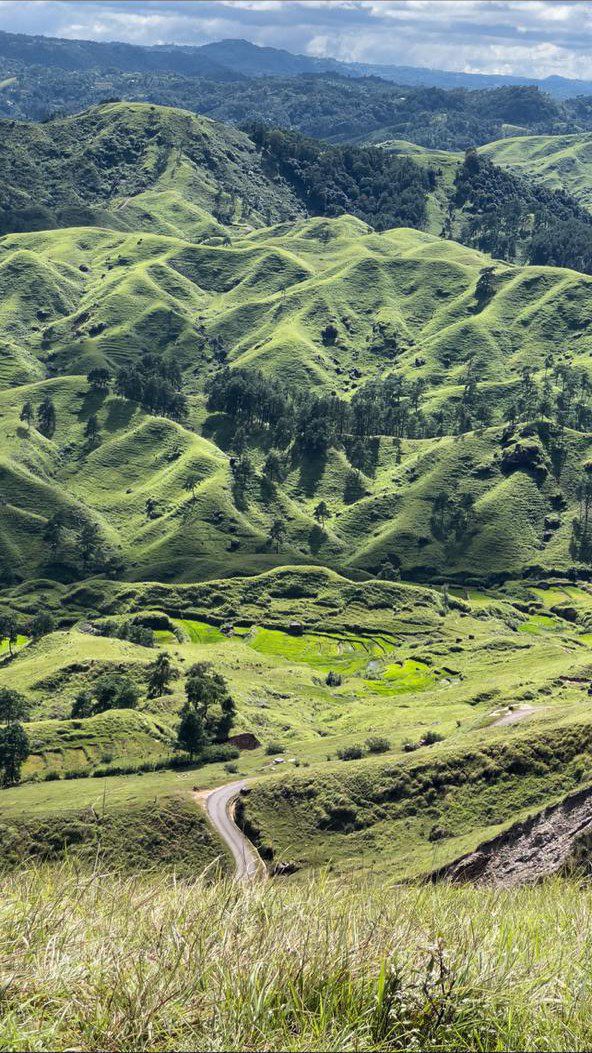
Leave Shillong by 8 am. Stop at Mawkdok Dympep Valley viewpoint, where the road first opens onto the gorge, and again at the Duwan Sing Syiem bridge.
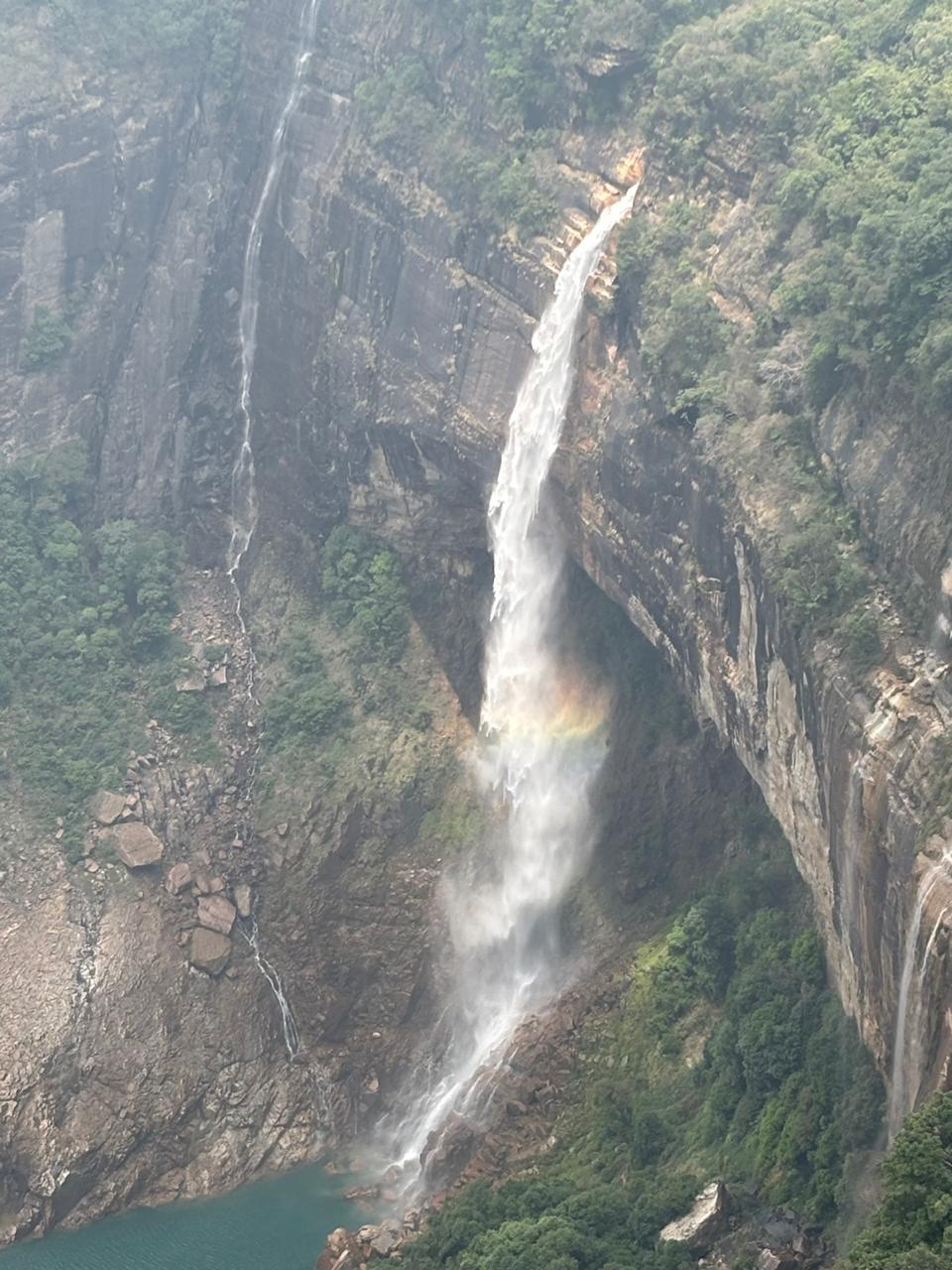
Reach Nokhalikha Falls by mid-morning — this is when the sun angle produces the rainbow in the spray. India's tallest plunge waterfall at 340 metres, with a terrace viewpoint and a market at the top selling local honey and cinnamon.
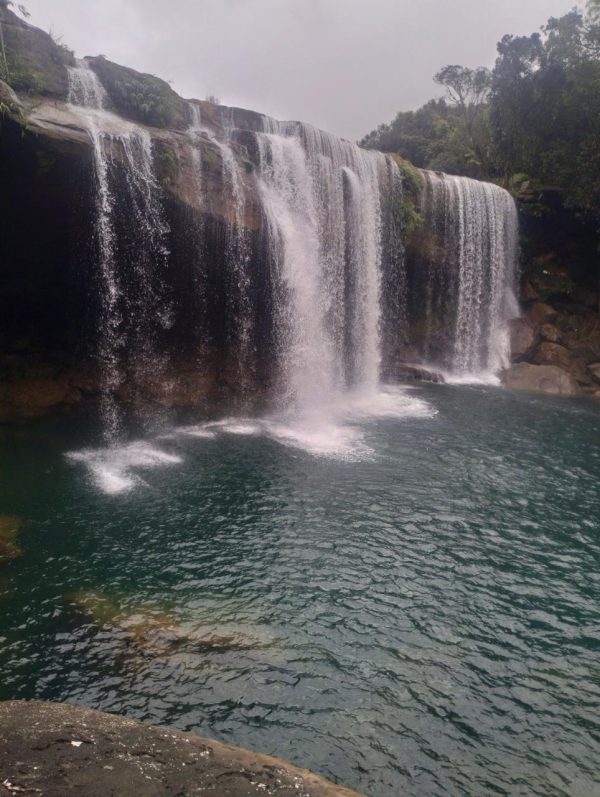
After lunch in Sohra, do Mawsmai Cave (twenty minutes, lit, walkable) then Seven Sister Falls, which faces west and is at its best in the late afternoon. Finish at Arwah Cave if you have time, or go straight to Thangkharang Park for Kynrem Falls and the Khoh Ramhah rock. Check in at Sohra for the night.
Day two — the gorge
Two options, depending on your legs.
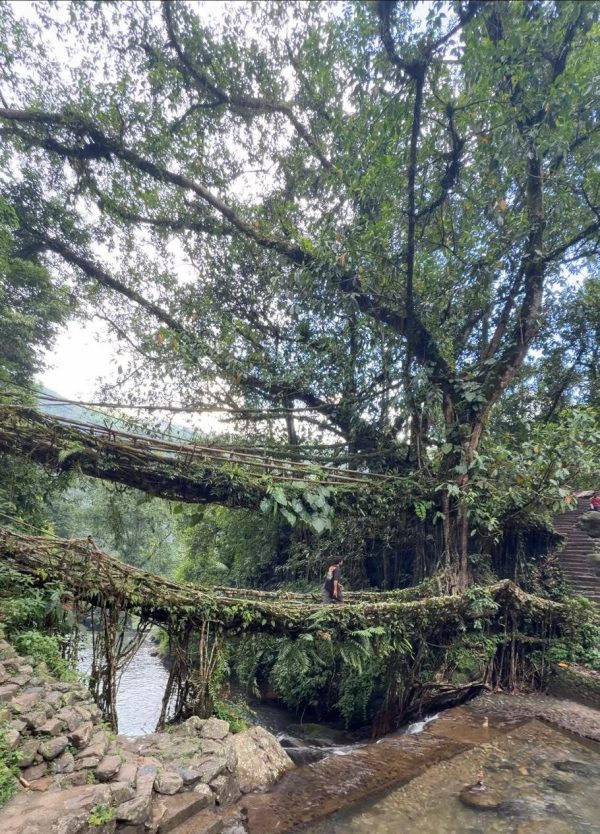
The trek: Start at Tyrna by 7 am for the Double Decker Living Root Bridge at Nongriat. Down is 1.5-2 hours, up is 2.5-3, and the reward is a 180-year-old two-tier bridge grown from fig roots. Add Rainbow Falls if you are fit and started early.
The alternative: Weisadong Falls by bamboo ladder (15 minutes each way, steep but short), then Dainthlen Falls, Nohkalikai viewpoint at a different hour, and the Eco Park at the plateau edge.
Where to stay
Sohra town has functional hotels; the plateau-edge resorts and family homestays 3-6 km out are better. Staying out of town also means you are ten minutes from the falls at sunrise rather than ninety.
Practical notes
- Carry cash. ATMs in Sohra are unreliable and most sites take cash only.
- Mobile network is patchy beyond Sohra town and absent in the gorge.
- Waterfall entry fees are small — budget 300-500 rupees per person for the day.
- Start early. By 11 am the main viewpoints fill with day-trip buses from Shillong.