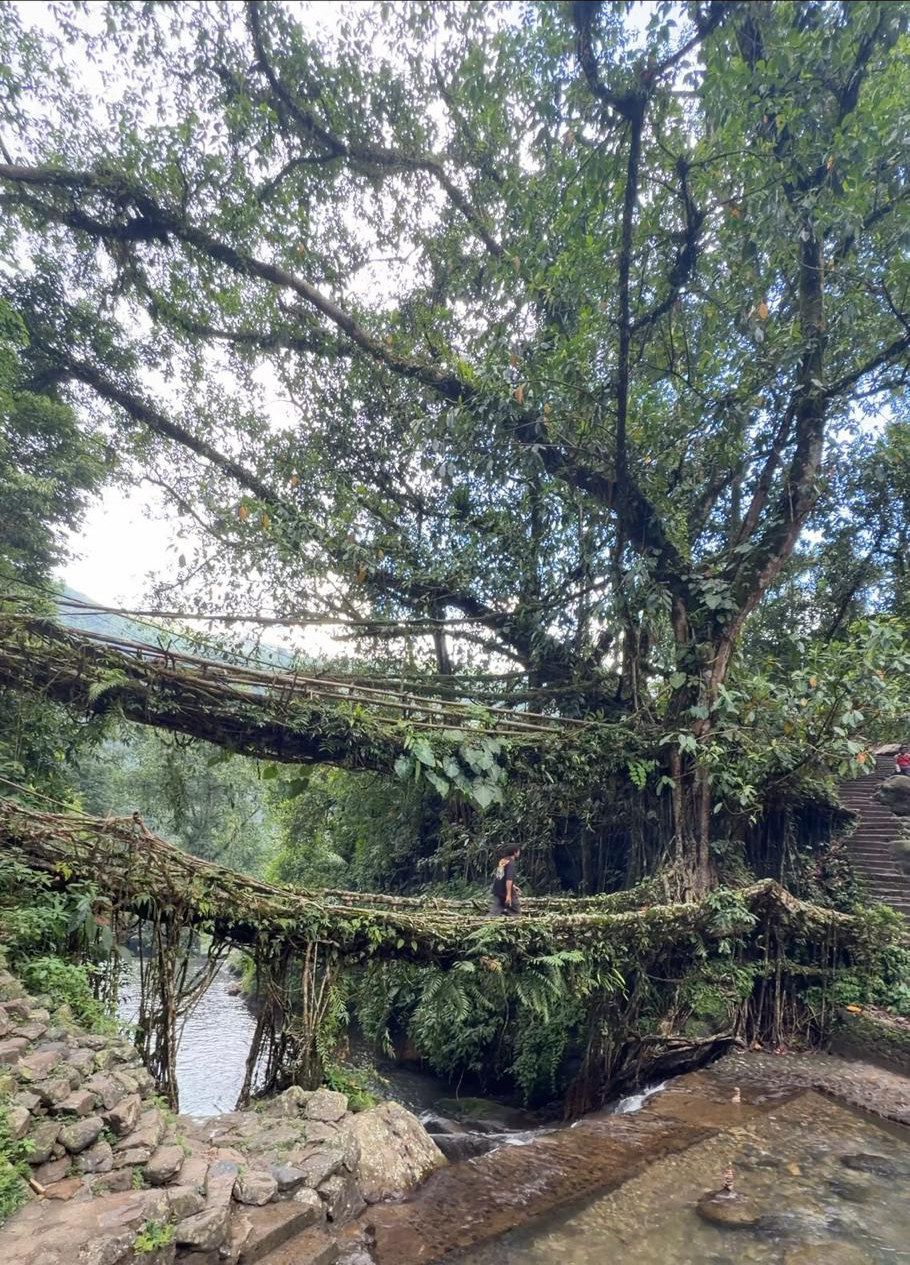
Every Meghalaya itinerary lists the Double Decker Living Root Bridge. Far fewer explain what the trek actually involves. Here is the honest version.
The numbers
From Tyrna village it is roughly 3,500 concrete steps down into the Umshiang gorge, across two steel suspension bridges, to Nongriat village. Descent takes most people 1.5 to 2 hours. The climb back takes 2.5 to 3.5 hours. There is no alternative route, no vehicle access, and no shortcut.
How hard is it?
The descent is hard on knees; the ascent is hard on lungs. If you climb four flights of stairs without stopping, you will manage — slowly, with breaks. Porters are available for luggage and, in emergencies, for people. Rest points with drinks exist at intervals.
Do not attempt it with knee or heart problems, in flip-flops, or without water. We say this to every client and we mean it.
When to go
October to April. Start by 7 am — you want the climb back done before the afternoon heat, and the bridge to yourself before the day groups arrive around 11. In monsoon the steps are slippery and leeches are active; carry salt and wear closed shoes.
What to carry
- Two litres of water per person, minimum
- Proper shoes with grip — not sandals
- A trekking pole if your knees are uncertain, available to rent at Tyrna
- Cash for the entry fee, guide, food and drinks
- A dry bag or ziplock for your phone
- Swimwear — the natural pools at Nongriat are the reward
Should you stay overnight?
Yes, if you can spare the day. Nongriat has basic guesthouses with simple rooms and home-cooked food. Staying means you see the bridge at dawn in silence, you can walk to Rainbow Falls without rushing, and you split the climb over two days instead of doing both halves in one. It is the single best upgrade to any Meghalaya itinerary.
Rainbow Falls
About 45 minutes to an hour beyond the double decker, over rougher trail. Morning sun throws a rainbow across the spray. Only worth it if you started early or stayed the night.
Respect the bridge
These are living structures maintained by the village. Limit numbers on a span, do not pull at the roots, carry your waste out, and pay the village entry fee — it funds the maintenance that keeps the bridge alive.